
Welcome to O.C. Barber Mansion
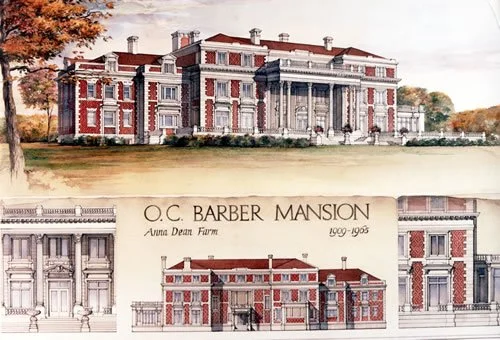
Construction of the Mansion
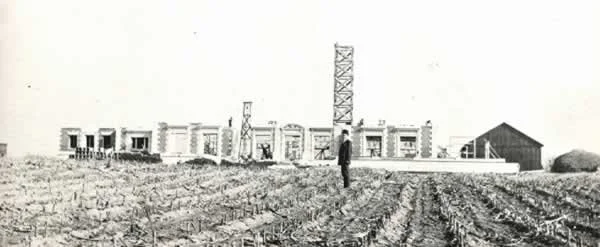
Not looking like its going to be a 300' long, home, the O. C. Barber Mansion begins to gracefully rise from a cornfield. The Mansion, built on the highest part of the Anna Dean Farm was completed in a little over 18 months time.
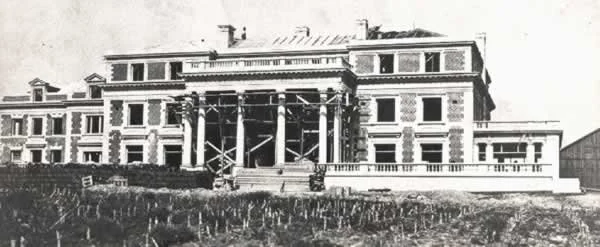
Nearing completion, notice the tile stacked to the left, the Barber Mansion would be finished in time for O. C. Barber to move in on October 31, 1910. Built at a cost of over $400,000, adjusting for inflation, this would be like spending over $6 million to build a house in the 21st Century.
The Finest Mansion Between New York and Chicago
The construction of the O. C. Barber Mansion took a little longer than the construction time of the rest of the average Anna Dean Farm building. A normal building on the Farm would be completed in less than nine months. The Mansion however was no ordinary Anna Dean Farm building.
Built from March of 1909 until October of 1910, the construction would take a little over 18 months and cost over $400,000. Barn No 1, built in 1909 would cost only $8000.00 to erect and be done in less than 9 months. O. C. Barber provided all of the block and material to build the buildings on the Anna Dean Farm. The block was all cast at the O. C. Barber Concrete Company on Norton Ave. From there it was loaded on the Belt Line siding and taken to Robinson Ave. Here a crane would transfer the load to the flat bed cars pulled by a half gauge logging locomotive. The Anna Dean Farm Rail Road, would pull the block and brick from the Belt Line siding up Robinson and deliver their load to each building under construction where it would be off loaded by a boom crane. After all of the material was delivered to a particular building the tracks were pulled up and rerouted to the next building. The Mansion was no exception.
The firm of Harpster and Bliss of Akron were the Anna Dean Farm architects. The Mansion, as was all of the Farm buildings, was built in the French Renaissance style of architecture, which originated at the Beaux Arts School of Architecture in Paris. The Barber Mansion was the crowning achievement, both of Harpster and Bliss and the Anna Dean Farm.
When completed, the Mansion composed of 52 rooms, gracefully spread out on four floors, amounting to over 50,000 square feet of space. Built running from north to south, the Mansion would have normal daylight exposure both in the morning, from the east, and in the afternoon from the west. Unlike many mansion's of the Victorian and post Victorian era the Barber Mansion was never meant to be dark and forbidding, but very light and bright on the inside from the natural sunlight. Upon its completion in 1910 the New York Times was quoted as saying, the Barber Mansion was "the finest mansion between New York and Chicago." It truly was.
The marble for the Barber Mansion was mined in Sienna Italy. The famous Sienna marble quarry was where Michaelangelo had mined the marble used in his restoration of the Vatican and all of his statuary. The wood work in the Mansion was of the finest oaks and circadian walnut. The Ballroom in the Mansion had a teakwood parquet floor, laid in a herring bone pattern. The ceiling in the Living Room Library was gold leaf, as was the tile in the bathrooms. A working elevator with a glass sky light serviced all four floors. Simply put, the O. C. Barber Mansion, was the finest mansion between New York and Chicago.
Exterior of the Mansion
West side of Mansion #1
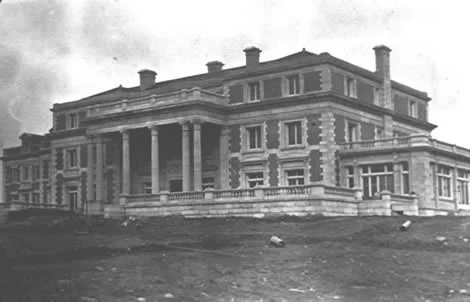
The O.C.Barber Mansion was constructed over a relatively short period of time. Construction began in 1909 and was completed in time for Mr. Barber to move into the Mansion on October 31st 1910. This is a view of the West side showing the servants wing on the North side.(left side of the photo) This is one of the few photos that shows the North end doors on the first floor that opened up into the Mansion kitchen's vestibule.
West side of Mansion #2
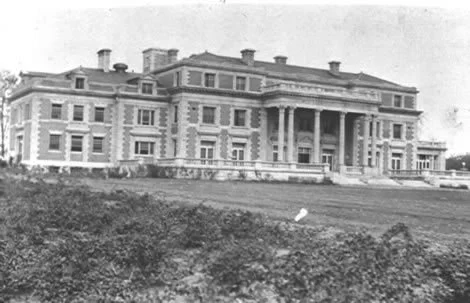
This view shows the west side of the O.C.Barber Mansion looking slightly to the North, right after the lawn was first put in. The Mansion faced west looking out over Barberton from the highest elevation on the Anna Dean Farm.
Woolsey and Blazer postcard view
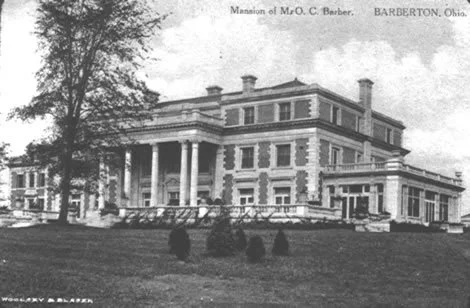
This is a black and white Woolsey and Blazer postcard view of the O.C.Barber Mansion, looking at the west side toward the North.
Front Lawn
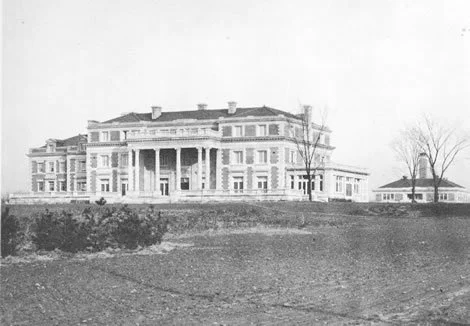
This view of the O.C.Barber Mansion shows the entire front lawn area prior to the installation of the lawn. The building in the background, a large structure in its own right is the Anna Dean Farm Power House. This building had an 18 room series of apartments on the second floor. On the first floor was a Stirling Boiler to generate steam heat for the Mansion, and Mr. Barber's Auto garage.
Rear View
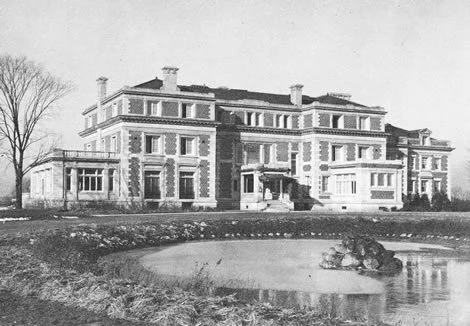
The rear, or east side of the Mansion, shown in the rear reflecting pond, prior to the installation of the landscaping. The 52 room French Renaissance Revival Mansion was considered to be the finest Mansion between New York and Chicago, when it was completed in 1910.
Overview photo
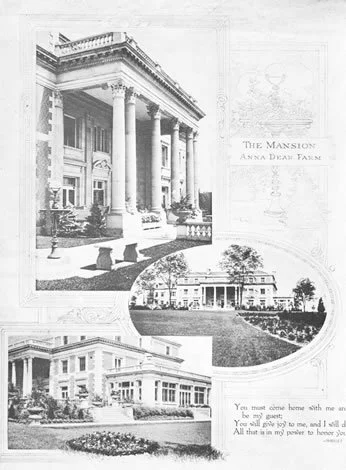
This is an overview photo from Mr. Barber's book, "Anna Dean Farm - The Story of an American Farm". This book is available for sale in the gift shop section of our web site. This overview page shows three nice photos of the front of the Barber Mansion, including the front portico, with its beautiful Corinthian pillars.
Front porch
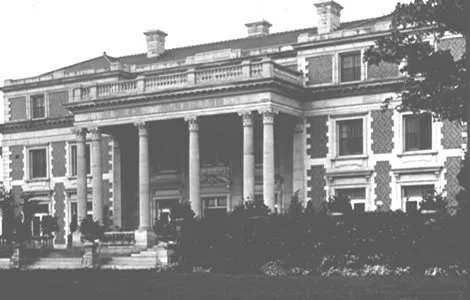
Close-up of the front porch of the Mansion after the landscaping has been completed. Prior to the installation of the landscaping in 1911, the Mansion looked pretty bare. As Mr. Barber was already 69 years old when the Mansion was completed, he quickly had the 35 acre Barber Park surrounding the Mansion landscaped with large trees and shrubbery.
Woolsey and Blazer close-up
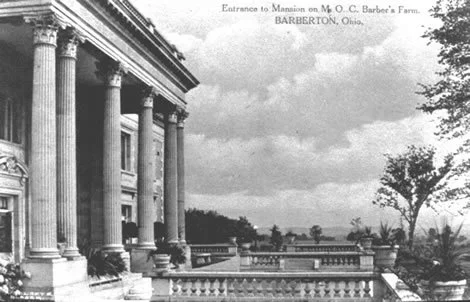
Another Woolsey and Blazer close-up of the front porch of the Mansion, after 1911, looking south.
Rear entrance
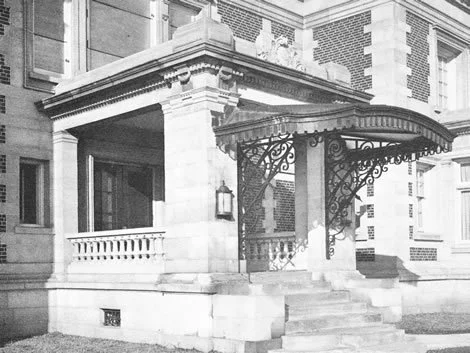
This is a close-up of the iron hood with its leaded glass canopy that covered the rear entrance of the Barber Mansion. This hood was in place so that Mr. Barber and his guests could step from their automobiles and walk up the Mansion steps without getting wet.
Front pillars
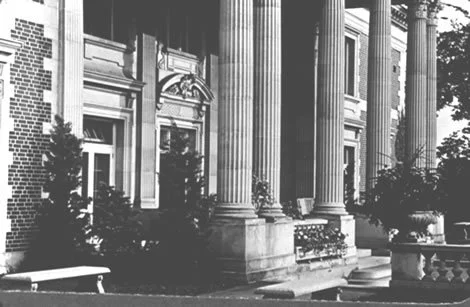
Close-up of the base of the Mansion's front pillars.
First Floor of the Mansion
Billard
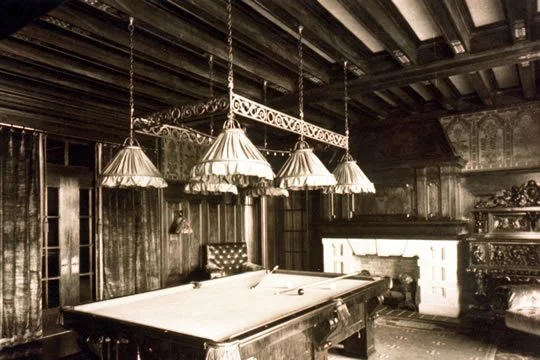
Photograph of the Billiard Room of the Barber Mansion, decorated with fine furnishings that included a custom black walnut billiard table that cost approximately $900.
Breakfast Room
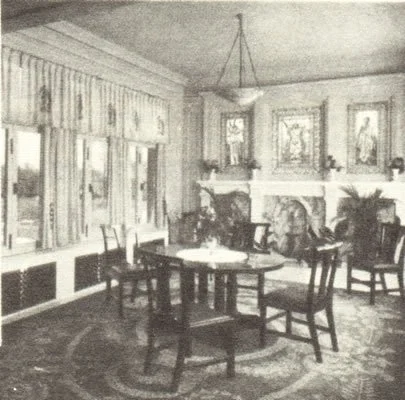
Photograph of the Breakfast Room of the Barber Mansion. The Breakfast Room was complete with a marble fountain that contained live goldfish and stained glass windows designed by the Tobey Furniture Company of Chicago. From left to right, the windows represent sunrise, midday and sunset. Two windows from this set hang in the Teen Central area of the Barberton Public Library.
Dining Room
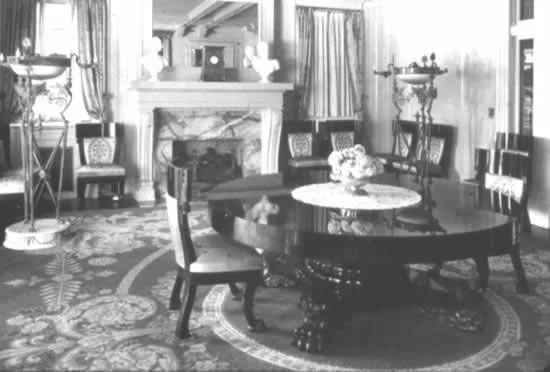
When O.C. Barber moved into his mansion on Halloween 1910, the home’s interior quickly became a showcase of his tastes and social life. The brown‑toned living room opened onto a large sun porch furnished in green and filled with plants during the winter months. Nearby were two dining rooms, including the grand space featuring Barber’s massive round black mahogany table, a prize‑winning piece from the 1904 St. Louis World’s Fair. This Second Empire‑style table, weighing more than three hundred pounds and accompanied by twelve matching chairs, was used for formal dinners set with fine china, lace mats, and monogrammed silverware. A smaller breakfast room served for more intimate meals, typically attended by a butler. Off the kitchen were pantries and servants’ quarters, while the second floor housed Barber’s private rooms and an advanced gymnasium equipped with electrically powered exercise “horses.” During holidays such as Thanksgiving—when Barber welcomed his widowed sister Eleanor, her children, and close friends—the mansion became a warm gathering place, and throughout the year it served as a lively social center, hosting dinners, bridge games, and frequent evening gatherings.
Elevator
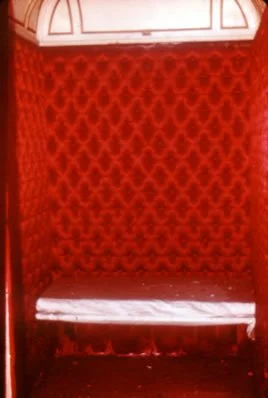
The children rode up to the third-floor ballroom in the elevator, which had a clear ceiling allowing the children to watch the pulleys and cable as the rode up on one of the only elevators around.
Kitchen
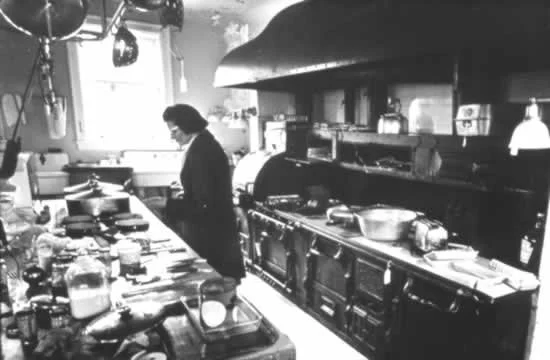
The mansion contained a modern kitchen (for its time) with a very large French-style commercial stove set up to burn wood, gas, or coal. The mansion basement was a fully stocked wine cellar.
Hallway
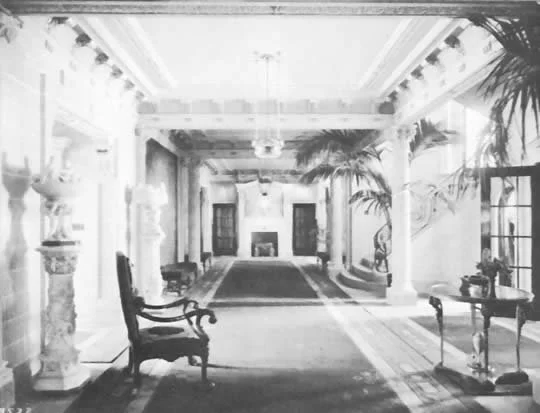
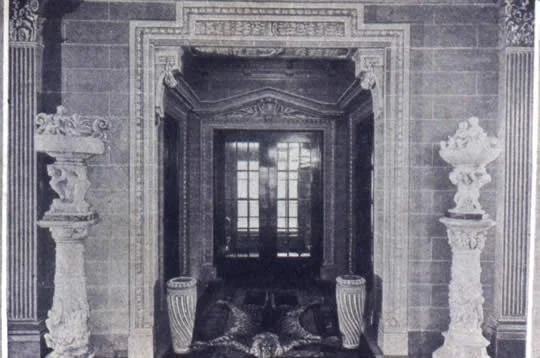
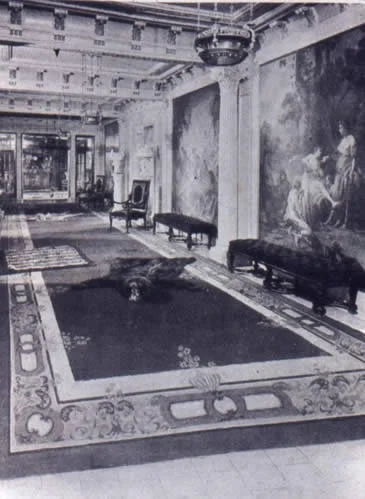
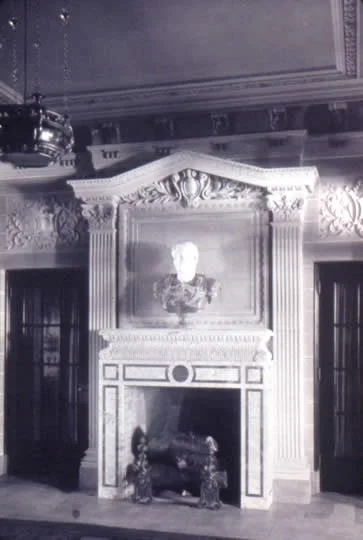
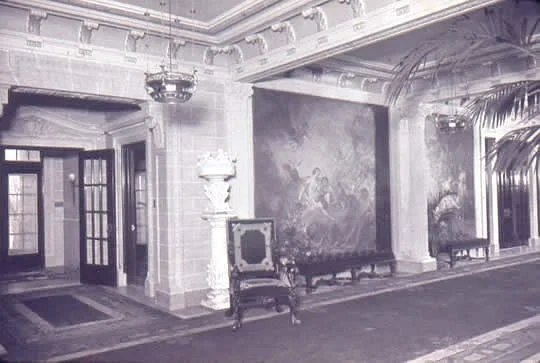
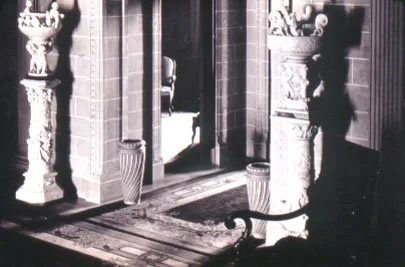
Photographs of the main floor hallway from the rear entrance of the Barber Mansion. The floors were constructed of Sienna marble from Italy, and the rugs were hand-loomed in Scotland especially for the mansion. Barber commissioned the murals on the wall, copies of Boucher paintings. The originals hang in the Louvre Museum in Paris, France.
Second Floor of the Mansion
Barber’s Bedroom
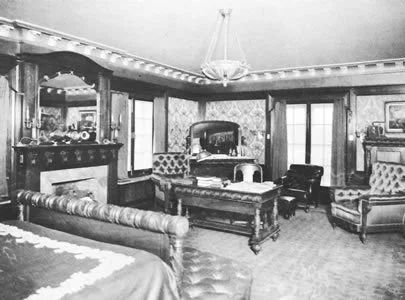
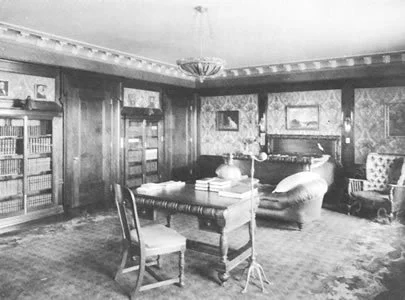
Photograph of Barber's master bedroom in his 50,000 square foot mansion. The walls of the bedroom were covered in gold silk brocade, and the room included Barber's personal library and a gymnasium attached to the bedroom through his personal bathroom.
Barber’s Bath
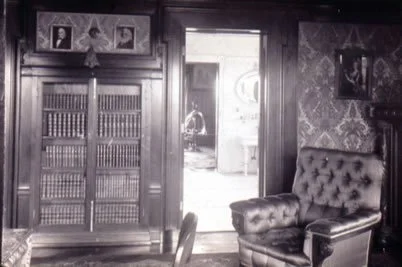
Barber’s day began early, at 5 a.m., with an exercise workout in the mansion’s gymnasium, it was right on the other side of Barber’s personal bathroom, next to his bedroom. Another member of the mansion’s staff was a personal trainer to keep him in shape. The gymnasium was well equipped with a treadmill, rowing machine, an electric riding horse, a rolling machine and an electric camel. Barber was very health conscious. He believed in a proper diet and regular exercise as part of daily schedule. He took a strong interest in the work of Dr. Harvey Kellogg, director of the Battle Creek Sanitarium in Battle Creek, Michigan and adopted some of his prescribed practices. After his morning shower in his full body circular needle shower, he headed for a hearty breakfast in the breakfast room. A typical breakfast of Mr. Barber consisted of two squabs, toast, and a big bowl of Anna Dean Farm Oatmeal topped with bananas from his greenhouse conservatory. Sometimes, Mr. Barber fed squab to his three dogs from the breakfast table. His Anna Dean Farm wheat cereal was covered with an ample supply of fresh Anna Dean Farm cream. Watermelon was another favorite at O.C. Barber’s table. Barber would eat an entire watermelon himself but only the watermelon heart. The rest was saved and mixed in with the hogs feed at the Piggery. It was their favorite too.
Brown
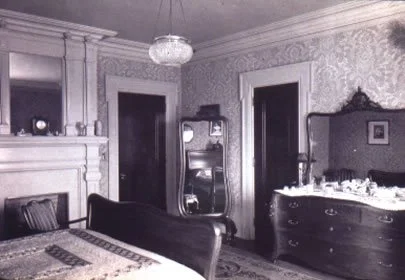
Photograph of the Brown Room, one of 26 bedrooms in the Barber Mansion. The Brown Room was located on the second floor of the mansion and was one of two rooms adjoining the Bevan Suite.
Mr. Barber
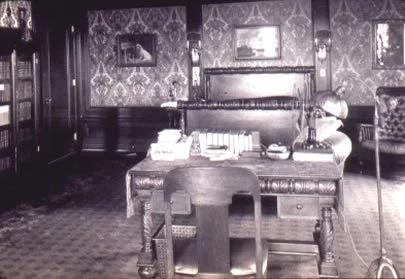
The big holiday for O.C. Barber was Christmas. Barber had a huge library, with a bookcase for every letter of the alphabet. He loved to read and among his most prized books was the complete works of Charles Dickens. A photo of Dickens hung in the Barber’s bedroom above the bookcase.
Mrs. Barber
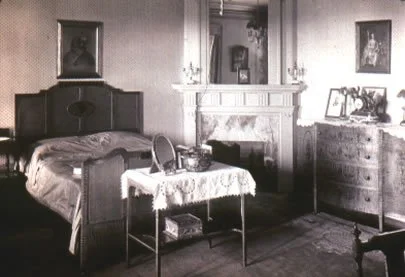
Mrs O.C. Barber’s bedroom
Hawthorn
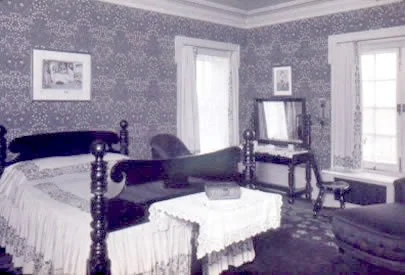
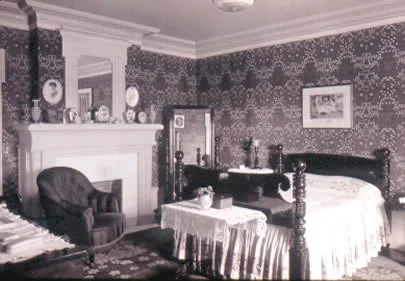
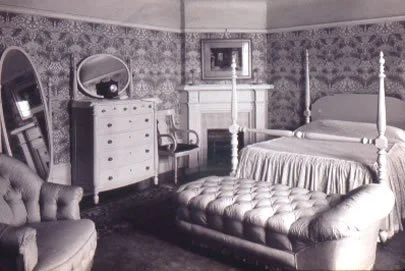
Photograph of the Hawthorne Room located on the second floor of the Barber Mansion. The mansion bedrooms contained William Morris textiles and fabrics, patterns that were very well-known and are still manufactured today.
Hallway
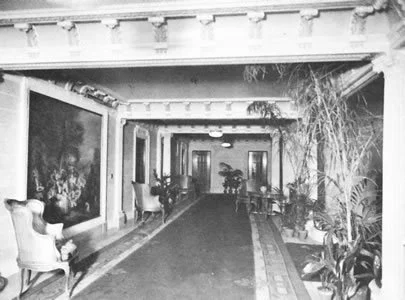
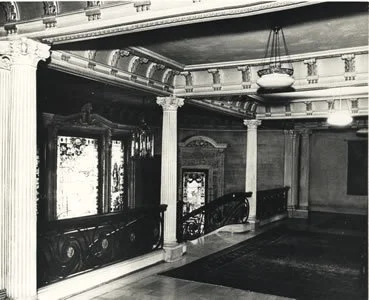
The hallway on the second floor of the O.C. Barber Mansion.
Anna and Arthur Bevan Suite
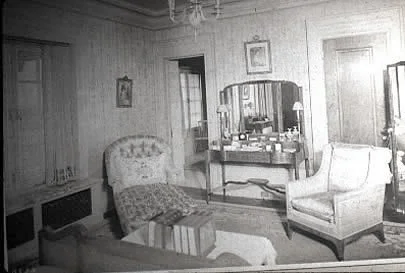
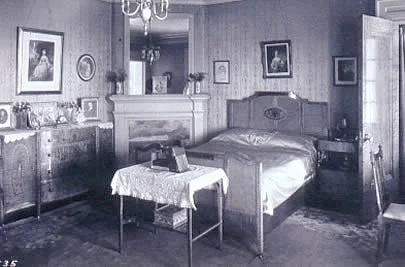
Photograph of the Barber Mansion suite created for Barber's daughter, Anna, and her husband, Dr. Arthur Bevan. This suite was located on the second floor of the mansion. Though the Bevans never lived in the mansion, they enjoyed the spacious accommodations of their own suite when visiting Anna's father.
Shower
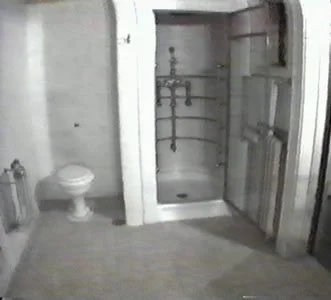
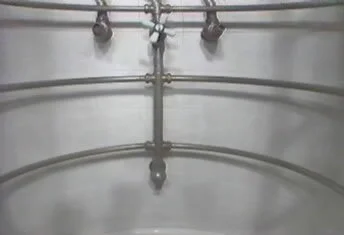
The shower within the O.C. Barber Mansion.
Third Floor of the Mansion
Ballroom
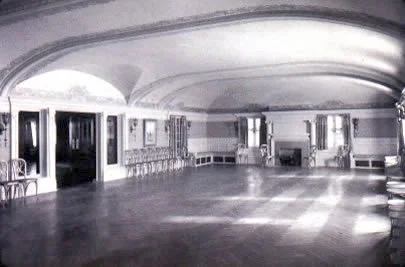
Photograph of the ballroom in the Barber Mansion. The ballroom was the site of the January 1916 wedding reception for O. C. Barber and his second wife, Mary Orr Barber.
Blue
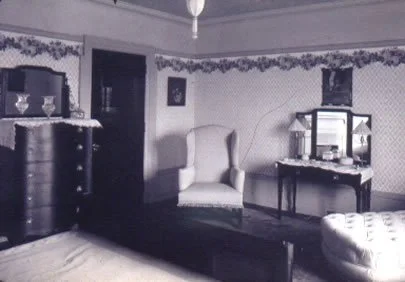
One of 26 bedrooms in the Barber Mansion.
Twin
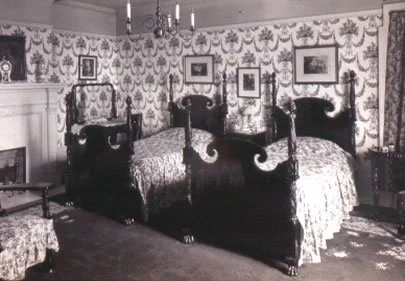
Photograph of the twin bedroom located on the third floor of the Barber Mansion. This room served as one of the mansion's guest bedrooms.
Green
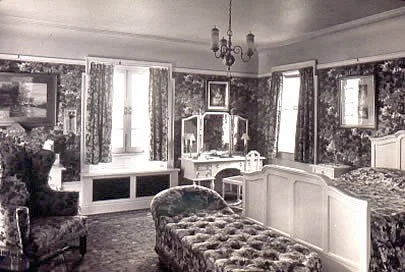
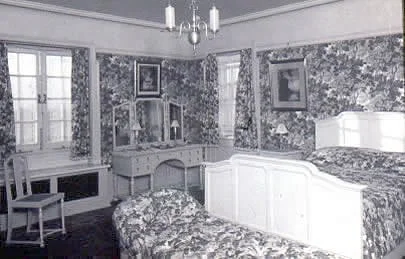
Photograph of the Green Room, a guest bedroom located on the third floor of the Barber Mansion. The furniture for the mansion came from Tobey Furniture Company of Chicago. The textiles and fabrics were William Morris patterns from Morris & Company.
Pink
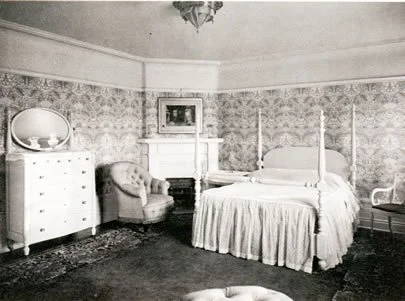
One of 26 bedrooms in the Barber Mansion.